
Border tensions between Azerbaijan and Armenia once again came into focus this week, amid a series of claims from the Armenian side and official responses from Baku.
What is happening on the border line?
The issue began attracting public attention after Armenia’s former Human Rights Defender and leader of the political initiative “Wings of Unity,” Arman Tatoyan, held an urgent press conference on March 4
Arman Tatoyan, claimed that a new Azerbaijani position had appeared in Armenia’s Gegharkunik region. Shortly afterward, initiative member Narek Paronyan said a request for clarification regarding the alleged “new Azerbaijani position” had been sent to Armenia’s Ministry of Defense, asking the ministry to review the information and clarify the situation.
Armenian Defense Minister Suren Papikyan later called Tatoyan’s claims false during a government Q&A session. The Armenian Ministry of Defense also denied reports that Azerbaijani forces had established a new military position on the sovereign territory of Armenia. According to ministry spokesperson Aram Torosyan, the Azerbaijani position in question does not cross Armenia’s state border and is located within the territory of Azerbaijan.
Torosyan also stated that satellite images from Google Earth used to support the claims contain inaccuracies and depict a border line with no legal basis. The ministry emphasized that Armenia determines the border line using official Soviet-era topographic maps from 1975 at a scale of 1:100,000, which officials say have legal validity.
A clear border line: Who has encroached on whom?
During a government press briefing on Thursday, Armenian Prime Minister Nikol Pashinyan referred to the Defense Ministry’s earlier explanation rejecting claims that Azerbaijan had improved its military positions inside Armenian territory. He stated that there is a clear de jure border line and that countries may take measures within their own sovereign territories. According to Pashinyan, existing territorial issues would be addressed through the border delimitation process.
Some Armenian media outlets claim that Azerbaijani forces control at least 241.4 km² of Armenia’s de jure sovereign territory and have allegedly advanced into Armenian territory at around 20 sections of the border, particularly during large-scale clashes in 2021–2022.
Armenian National Assembly Speaker Alen Simonyan previously stated that the situation is mutual, saying Armenian forces are also positioned on Azerbaijani territory. He cited the Tavush region, claiming Armenia controls about 110 km² of Azerbaijan’s de jure territory.
In May 2024, following delimitation work near the Gazakh district, four villages, Baghanis Ayrim, Ashagi Askipara, Kheyrimli, and Gizilhajili were officially returned to Azerbaijan. According to Azerbaijan’s 2024 Cabinet report, this process returned 6.5 km² of territory and defined 12.7 km of the Azerbaijan–Armenia border.
Despite these developments, disputes remain. Questions persist about possible territorial exchanges and the causes of border violations. Abzas Media sent inquiries to the defense ministries of both countries, but had not received responses by the time of publication.
What do experts say?
Professor of International Law Farhad Mehdiyev told Abzas Media that the establishment of a new Azerbaijani military post somewhere does not necessarily mean that the state border passes through that location. He noted that limited information makes it difficult to assess such claims and emphasized that disputes will continue until the border between the two countries is formally delimited and demarcated. According to him, the commissions responsible for these processes should accelerate their work so that a clearly defined border line can reduce such disagreements.
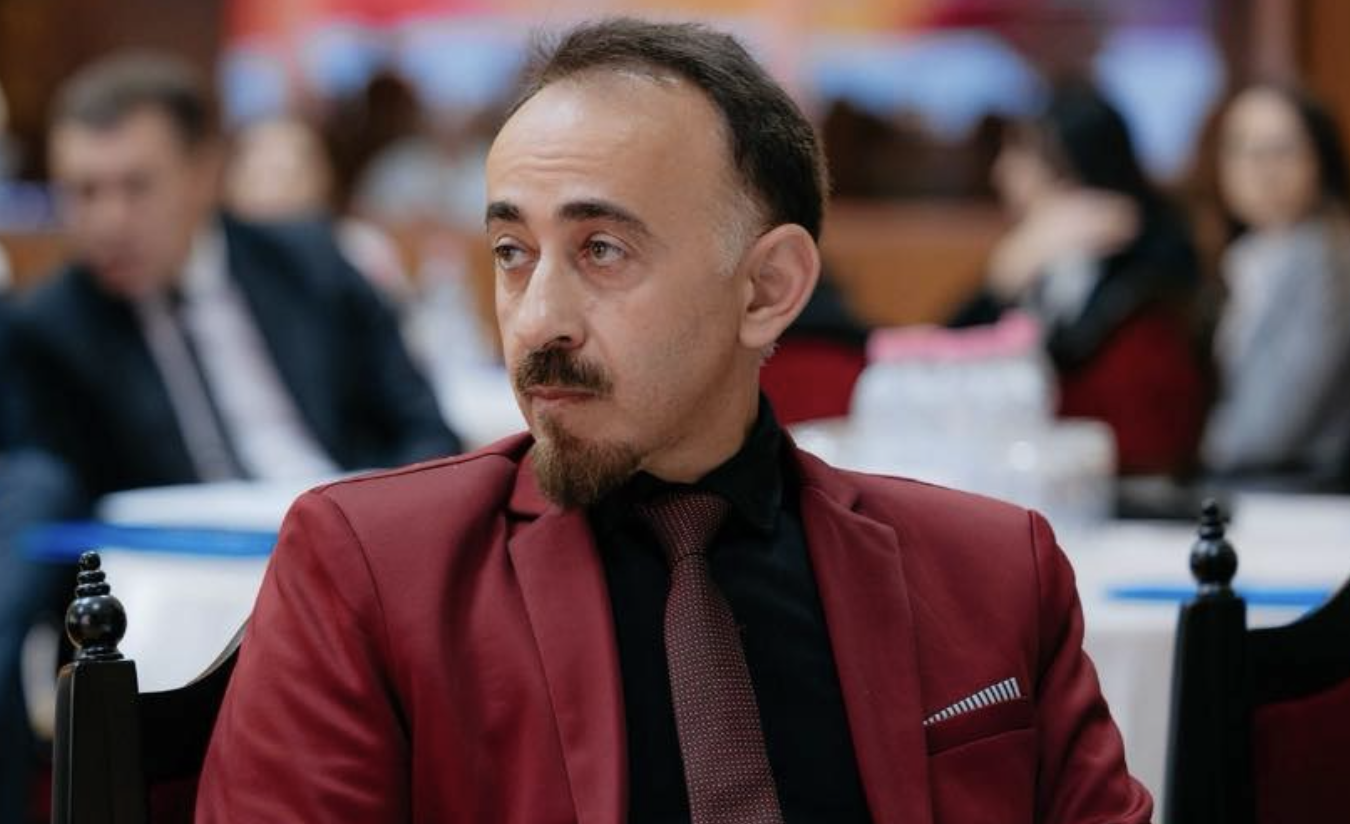
Richard Giragosian, director of the Regional Studies Center, an independent think tank in Yerevan, stated that over the past year there have been unprecedented positive developments in diplomatic relations between Armenia and Azerbaijan. He added that the situation along the bilateral border remains an important element of the post-war negotiations between the two countries.
“The remaining sticking point on border demarcation is the ongoing presence of Azerbaijani military units located on roughly 200 square kilometers of sovereign Armenian territory that were seized in border clashes in 2021-2022. These are bargaining chips for Azerbaijan and should be part of an eventual complete agreement on border delineation”, he said.
Some experts believe that the issue of several enclaves/exclaves located in the territories of Azerbaijan and Armenia could potentially be resolved through mutual territorial exchange. According to Farhad Mehdiyev, such a solution would depend on the positions of the governments and the outcome of negotiations, and any official territorial exchange would require a referendum, since it would involve one state transferring territory to another.
Richard Giragosian said that, considering the precedent of mutual territorial returns along the northern border, such a scenario is possible: “But this would depend on the course, and outcome of the bilateral talks over final border demarcation.” Richard Giragosian said that much of the progress in diplomatic talks has occurred through direct face-to-face meetings between the leaders, without European or Russian involvement.

According to him, Armenia’s current approach is to keep responsibility for border violations with the parties themselves. “However, the present EU monitoring mission would offer an effective avenue for third-party independent monitoring of any possible border violations in the future.”
Is lasting peace possible?
Against the backdrop of the border issues mentioned above, how realistic does lasting peace between the parties appear?
According to Farhad Mehdiyev, it is possible for the parties to achieve lasting peace. “There are sufficient reasons for this: communication lines have been partially restored, oil is transported from Azerbaijan to Armenia, and so on. I think they will achieve peace,” the expert said. In his view, however, the current situation in Iran is somewhat hindering the process:
“Because there is the issue of the TRIPP corridor. That is also related to whether Trump remains in office. In the United States, the Epstein issues have emerged. True, because of the Iran issue the Epstein files have somewhat fallen off the agenda, but I think the construction of the TRIPP corridor will depend on Trump’s position. Let’s see what Trump’s position will be after the war and whether there will be any change in it.”
Richard Giragosian also believes that the parties will be able to achieve lasting peace. “But the issue of border demarcation is only one of several issues of consideration for an eventual “lasting peace.” And at this stage, “normalization” of relations between Armenia and Azerbaijan is a much more realistic objective than “lasting peace,” he said.
Farhad Mehdiyev does not think that a military clash will occur between Azerbaijan and Armenia under the current political authorities. “There will be no clashes. If Pashinyan is replaced and revanchist forces come to power, they may try to enter a war under some pretext by securing the support of a third state. They would not enter without the support of a third state. Armenia is currently investing in the field of artificial intelligence, and I think if it believed that there was a war situation, billions of dollars would not be invested in this sector. That means the threat of war does not appear to be present if they are doing this.”
According to Richard Giragosian, the unprecedented reduction in tensions between Armenia and Azerbaijan is the direct result of the meeting held in Abu Dhabi in July 2025 between the leaders of Armenia and Azerbaijan, where a preliminary agreement on the draft of a new bilateral peace treaty was reached.
“The two sides also forged a compromise over the terms of an ambitious accord on connectivity, with plans for the restoration of road and rail transit through southern Armenia. And it was those agreements that paved the way for the Trump Administration to bring the Armenian and Azerbaijani leaders together for a White House “peace summit.” That August 2025 ceremony resulted in an initialing of a bilateral peace treaty and the signing of a new American-backed connectivity agreement, immodestly termed the “Trump Route for International Peace and Prosperity” or TRIPP. Since then, the situation along the border is generally stable and after Azerbaijan’s move to unilaterally lift restrictions on trade and transit with Armenia, talks on border demarcation are expected to be much less controversial and much more promising,” Giragosian said.
According to Giragosian, in this context the prospects for the normalization of relations between Armenia and Turkey have already entered a new stage that is more conducive to normalization.
“This is matched by political will and political cover for Türkiye. And although Azerbaijan is still holding Türkiye hostage, even Baku has provided tentative support for a partial border reopening,” he said.
Azerbaijan and Armenia: Forecasts for the future
For Richard Giragosian, long-term stability and security require greater connectivity.
“The imperative of ‘connectivity’ is crucial for longer term ‘stabilization’ and security. Despite everything else, there is a rare opportunity of regional cooperation, with the post-war geopolitical landscape in the South Caucasus offering a degree of promise over peril.”
“More specifically, this opportunity for regional cooperation stems from the outlook for the restoration of regional trade and transport.”
According to the expert, negotiations between Armenia and Azerbaijan have already produced an important preliminary agreement related to transport links between Azerbaijan and its exclave Nakhichevan through southern Armenia.
“Negotiations between Armenia and Azerbaijan have resulted in an important preliminary agreement that reiterated and reaffirmed Armenian sovereignty over all road and railway links between Azerbaijan and its exclave Nakhichevan through southern Armenia.”
He explains that the first stage of this process focuses on restoring connections between Azerbaijan and Nakhichevan.
“The successful agreement over the restoration of regional trade and transport is limited to the links between Azerbaijan and Nakhichevan as the first stage, however, with the planned reconstruction of the Soviet-era railway link and the construction of a highway through southern Armenia to follow.”
A broader second stage would involve larger regional infrastructure projects.
“That broader second stage of regional trade and transport encompasses a more expansive (and significantly more expensive) strategy that includes the reopening of the closed border between Türkiye and Armenia, and the restoration of the Soviet-era railway line between Kars and Gyumri, as well as the eventual extension of the Azerbaijani railway network to allow Armenian rolling stock from southern Armenia in a north-eastern direction through Baku and on to southern Russia.”
Giragosian argues that restoring regional trade and transport represents the clearest “win-win” scenario for post-war stability in the South Caucasus.
“The issue of the restoration of regional trade and transport is significant as the only clear example of a ‘win-win’ scenario for post-war stability, with the economic and trade opportunities important for all countries in the region.”
He also emphasizes the importance of economic interdependence in preventing renewed conflict.
“It is also crucial to regain deterrence by forging economic interdependence, in order to prevent any renewed hostilities. And in this way, economic incentives and trade opportunities have been elevated to a new and unprecedented degree of importance that has been long missing from the region.”
Author: Jasur Mammadov
